iGene Labserve

Why Choose Lab Equipment for Your Global Laboratory Needs?

Choosing Lab Equipment for global laboratory needs requires more than comparing prices and product photographs. It demands careful attention to accuracy, durability, service, and operating conditions. A centrifuge used in a humid coastal facility may need different protection than one installed in a dry, temperature-controlled room. Small details matter.

Reliable laboratories usually evaluate equipment through documented specifications, calibration records, warranty terms, and supplier support. They also consider training, replacement parts, electrical standards, and delivery conditions. A balance that reads accurately in one country may require local calibration after transportation. Good planning reduces that risk.

Still, no purchasing decision is perfect. Budgets change. Shipping delays happen. Even experienced teams can overlook maintenance time or user training. That is why a practical evaluation should include laboratory technicians, quality managers, and procurement specialists. Their combined experience can reveal problems that a catalog cannot show. Ask direct questions. Request evidence. Test where possible.

Choosing the right Lab Equipment can improve workflow consistency, protect valuable samples, and support dependable results across international facilities. However, equipment alone does not create quality. Clear procedures, competent users, regular maintenance, and responsible documentation remain essential. Suppliers with transparent technical information and responsive after-sales service offer stronger long-term value. For global laboratory operations, the best choice is not always the most advanced instrument. It is the one that fits the application, environment, standards, and people using it every day.
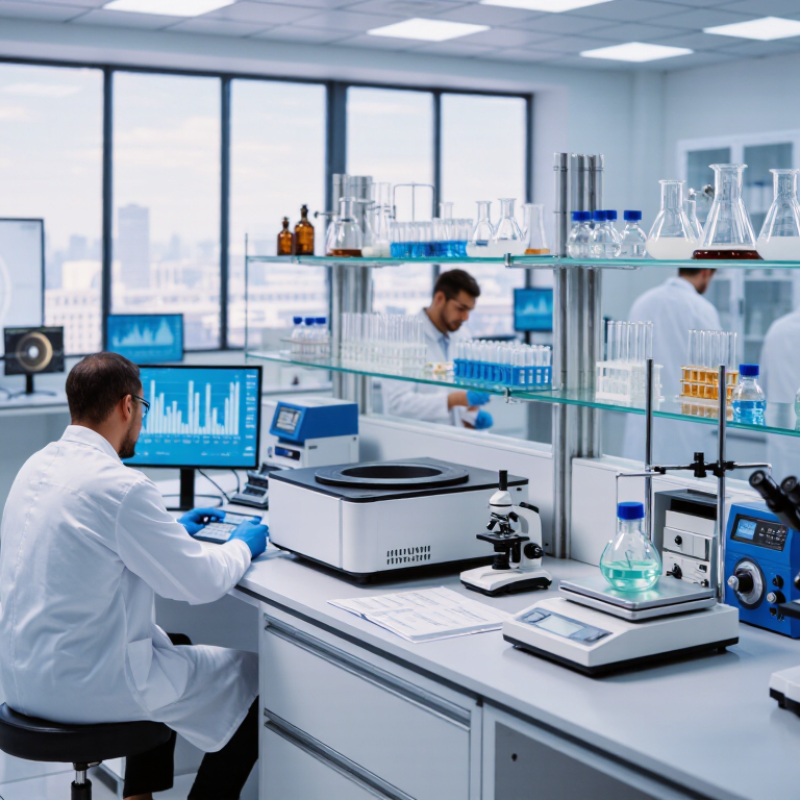
Why Choose Lab Equipment for Your Global Laboratory Needs?

What Laboratory Equipment Includes: Instruments, Consumables, and Support Systems

Why Choose Lab Equipment for Your Global Laboratory Needs?

Laboratory equipment is more than a bench instrument. It includes analyzers, microscopes, centrifuges, balances, pipettes, and temperature-controlled storage. Consumables are equally important. Tubes, filters, tips, gloves, reagents, and labels directly influence testing consistency. A reliable instrument cannot compensate for poor consumable quality.

Support systems complete the working environment. They include calibration records, preventive maintenance, software integration, staff training, spare parts, and temperature monitoring. The OECD’s Main Science and Technology Indicators reported research and development spending at about 2.7% of OECD GDP in 2022. This investment increases demand for dependable laboratory infrastructure. The WHO Laboratory Biosafety Manual, fourth edition, also emphasizes risk assessment, competent personnel, and validated procedures. These requirements apply across different laboratory settings.

Global purchasing adds practical challenges. Voltage, language, service access, shipping conditions, and local technical skills can differ sharply. A cold-storage unit may need an independent temperature alarm and backup power. Small details matter. UNESCO’s Institute for Statistics reported global R&D spending at roughly 1.93% of GDP in 2021, showing the scale of scientific activity worldwide. Yet a complete equipment list is rarely perfect. Teams may overbuy consumables or underestimate calibration time. That weakness deserves review. A better plan links every instrument to its workflow, consumable supply, maintenance schedule, and trained operator.

Why Choose Lab Equipment for Your Global Laboratory Needs?

Laboratory capability depends on three connected areas: instruments, consumables, and support systems.

This illustrative planning benchmark allocates the largest share to instruments because they provide measurement and testing capability. Consumables support routine throughput, while support systems maintain safety, storage, environmental control, and operational continuity. Actual proportions vary by laboratory type, test volume, regulatory requirements, and location.

Equipment Categories by Function: From Sample Preparation to Data Analysis

Why Choose Lab Equipment for Your Global Laboratory Needs?

Equipment selection should follow the laboratory’s workflow, not product popularity. Sample preparation equipment may include homogenizers, centrifuges, grinders, pipettes, and precision balances. Each tool affects sample consistency. A poorly mixed sample can weaken every result that follows. In routine laboratory planning, I have learned that simple details matter, such as rotor capacity, cleaning access, and temperature control.

Separation equipment supports filtration, extraction, and fraction collection. Measurement equipment then evaluates volume, mass, temperature, concentration, or other defined properties. Environmental equipment, including incubators and controlled storage units, protects sensitive samples during testing. Data analysis tools complete the process by recording results, checking trends, and supporting traceable reports. Reliable laboratories connect these categories carefully. Calibration records, maintenance schedules, and documented methods should remain easy to review. A neat workflow on paper can still fail. Power limits, staff training, and room layout are sometimes overlooked.

Tips: Map each procedure before purchasing equipment. Note sample size, throughput, cleaning time, accuracy, and available space. Choose systems with clear instructions and accessible service documentation. Leave room for future testing. This is often difficult.

I would also test the workflow with real samples before full implementation. A device may perform well during a demonstration but feel inconvenient during a busy shift. Operators should record these practical observations. Their feedback can reveal awkward controls, frequent interruptions, or preventable handling errors. That evidence supports more dependable decisions across different laboratory environments.

Why Choose Lab Equipment for Your Global Laboratory Needs? - Equipment Categories by Function: From Sample Preparation to Data Analysis

Functional Category Common Equipment Primary Function Typical Applications Key Performance Factors Typical Sample or Data Type Global Laboratory Considerations
Sample Collection & Storage Cryogenic Freezers, Laboratory Refrigerators, Storage Cabinets Preserve samples and maintain stable storage conditions before testing. Biological specimens, reagents, reference materials, environmental samples. Temperature uniformity, alarm systems, storage capacity, recovery time, monitoring capability. Cells, tissues, serum, plasma, chemicals, standards. Temperature & Power Compatibility
Voltage requirements, backup power, ambient operating range, and local service support should be reviewed.
Sample Preparation Centrifuges, Homogenizers, Shakers, Vortex Mixers, Grinders Separate, mix, disrupt, or homogenize samples to create a consistent test portion. Cell separation, tissue disruption, extraction, mixing, particle reduction. Speed range, rotor capacity, force control, temperature management, reproducibility. Cell suspensions, tissue extracts, soil, food, pharmaceutical formulations. Workflow Adaptability
Consider tube formats, batch size, consumable availability, safety standards, and operator training.
Liquid Handling Adjustable Pipettes, Electronic Pipettes, Dispensers, Automated Liquid Handlers Transfer and dispense liquids accurately and consistently. Serial dilution, reagent preparation, plate setup, nucleic-acid workflows, assay development. Accuracy, precision, volume range, ergonomic design, contamination control. Buffers, reagents, biological fluids, assay mixtures. Calibration & Consumables
Use suitable tips and verification procedures; calibration intervals may depend on regulations and workload.
Separation & Purification Filtration Units, Chromatography Systems, Extraction Apparatus Remove unwanted components or isolate target compounds. Protein purification, solvent extraction, sample cleanup, water analysis, pharmaceutical testing. Resolution, flow control, membrane compatibility, recovery, chemical resistance. Proteins, metabolites, pollutants, active ingredients, dissolved substances. Method & Material Compatibility
Verify solvents, membranes, columns, pressure limits, waste handling, and local chemical-safety requirements.
Thermal Processing Laboratory Ovens, Incubators, Hot Plates, Water Baths, Thermal Cyclers Apply controlled heating, cooling, incubation, or temperature cycling. Microbial culture, drying, sterilization support, digestion, amplification workflows. Temperature accuracy, uniformity, ramp rate, stability, programmable control. Microbial cultures, chemical solutions, biological reactions, dried materials. Environmental Control
Room ventilation, humidity, heat output, calibration, and electrical requirements can affect performance.
Sterilization & Contamination Control Steam Sterilizers, Dry-Heat Sterilizers, Biosafety Cabinets, Clean Benches Reduce contamination risks and protect personnel, samples, or the surrounding environment. Media preparation, sterile transfers, microbiology, cell culture, reusable instrument processing. Cycle validation, airflow performance, filtration efficiency, chamber capacity, safety interlocks. Culture media, instruments, cell cultures, microbiological samples. Compliance & Validation
Installation qualification, operational checks, maintenance records, and facility requirements are important across regions.
Microscopy & Imaging Optical Microscopes, Fluorescence Microscopes, Digital Imaging Systems Visualize structures, particles, cells, and surface features. Cell biology, materials inspection, pathology research, microbiology, quality control. Magnification, numerical aperture, resolution, contrast, illumination, image quality. Cells, microorganisms, fibers, particles, tissue sections, manufactured surfaces. Image Standardization
Use consistent illumination, calibration references, file formats, and data-storage practices.
Chemical Analysis Spectrophotometers, Fluorometers, Chromatographs, Elemental Analyzers Identify or quantify chemical components through optical, separation, or elemental measurements. Concentration testing, purity assessment, environmental analysis, food testing, formulation studies. Sensitivity, selectivity, detection limit, linearity, repeatability, calibration stability. Absorbance, fluorescence, chromatograms, elemental concentrations, spectral profiles. Standards & Methods
Method validation, reference materials, solvent quality, gas supply, and regulatory requirements should be planned.
Physical Property Testing Balances, Moisture Analyzers, pH Meters, Conductivity Meters, Rheometers Measure mass, moisture, acidity, conductivity, viscosity, and other physical properties. Raw-material inspection, formulation control, water testing, materials research, process monitoring. Resolution, accuracy, repeatability, sensor stability, environmental sensitivity. Mass, moisture percentage, pH, conductivity, viscosity, density. Calibration Traceability
Control vibration, temperature, humidity, and access to suitable calibration standards.
Molecular & Cellular Analysis Nucleic-Acid Amplification Systems, Cell Counters, Electrophoresis Systems Analyze genetic material, cells, proteins, or molecular size differences. Genetic testing, research, pathogen detection, cell culture monitoring, protein analysis. Signal sensitivity, thermal accuracy, throughput, contamination prevention, assay compatibility. Amplification curves, cell counts, DNA or RNA bands, protein profiles. Reproducibility & Data Integrity
Use controls, validated protocols, secure data storage, and procedures suitable for the intended jurisdiction.
Data Acquisition & Analysis Laboratory Information Management Systems, Data Loggers, Analysis Software Capture, organize, process, visualize, and report laboratory results. Sample tracking, instrument integration, quality control, trend analysis, audit preparation. Data accuracy, audit trails, user permissions, interoperability, backup and recovery. Test results, metadata, calibration records, quality-control charts, reports. Interoperability & Security
Consider language support, privacy obligations, network access, cybersecurity, data export, and long-term retention.
Quality Assurance & Calibration Calibration Standards, Reference Materials, Verification Instruments Confirm that instruments and methods produce reliable and traceable results. Routine verification, method validation, proficiency testing, internal quality control. Traceability, uncertainty, stability, certified values, measurement range. Control charts, reference values, calibration curves, uncertainty estimates. Regulatory Alignment
Document procedures, maintain service records, and select standards appropriate to the method and region.
Selection principle: Match equipment capacity, measurement performance, safety requirements, infrastructure, serviceability, and data needs to the laboratory’s methods and operating environment.

Global Diagnostic Demand: WHO Links 70% of Decisions to Test Results

Why Choose Lab Equipment for Your Global Laboratory Needs?

Global Diagnostic Demand: WHO Links 70% of Decisions to Test Results

The World Health Organization links nearly 70% of healthcare decisions to diagnostic test results. This dependence makes laboratory equipment more than a purchasing decision. It becomes part of patient safety. Reliable analyzers, accurate pipettes, and stable refrigeration support consistent results across different regions. In my experience, even a small temperature change can affect a sensitive sample.

Global laboratories also face uneven power supply, limited technical support, and demanding workloads. Equipment should match local conditions, not only the laboratory’s ideal plan. Clear operating procedures and simple maintenance access matter greatly. A powerful system is not always the best system. Sometimes, the easier instrument performs more reliably.

Tips: Check calibration records before purchase. Confirm voltage compatibility and environmental requirements. Ask how quickly replacement parts can arrive. Train staff with practical samples, not only manuals. Keep a written maintenance log. It may seem basic, but missed records create avoidable uncertainty. Equipment selection should also include internal controls, result verification, and regular quality assessment. No laboratory is perfect, and every process deserves review. A rushed purchase can look efficient today, then create delays during a critical testing period.

International Quality Requirements: ISO 15189, ISO/IEC 17025, and OECD GLP

Choosing laboratory equipment for global use requires more than checking speed, capacity, or purchase price. International quality requirements shape every practical decision.

ISO 15189 supports reliable medical laboratory services, including controlled processes, competent staff, and traceable results.

ISO/IEC 17025 focuses on testing and calibration competence, with strong expectations for method validity and measurement uncertainty.

OECD GLP adds structure to non-clinical studies. Equipment should support approved procedures, documented maintenance, and secure data handling.

A balance may need daily checks, calibration records, and protection from unauthorized adjustments. A temperature-controlled cabinet should record conditions continuously, not only when an inspector visits.

Records matter. Small gaps spread.

From practical laboratory reviews, equipment with clear manuals and accessible service histories is easier to manage during audits. Digital audit trails can show who changed a setting and when.

However, software alone does not create compliance. Staff still need training, documented procedures, and routine performance checks.

No instrument is perfect. We have seen teams overvalue advanced features while overlooking cleaning access or spare-part availability. That mistake can interrupt testing for days.

A better assessment connects each instrument to its intended method, risk level, and quality requirement.

Before purchase, laboratories should examine installation needs, calibration intervals, environmental limits, and data export controls. The right choice supports dependable evidence across borders, but only when daily practice matches the written system.

Why Global Sourcing Matters: Compliance, Interoperability, Service, and Cost

Global sourcing matters when laboratory equipment must perform reliably across borders. Compliance is more than a certificate in a folder. It includes electrical safety, material documentation, calibration records, and local regulatory requirements. Experienced purchasing teams check these details before installation, not after a failed inspection. Small gaps can delay an entire testing program.

Interoperability also deserves close attention. Instruments should communicate with existing software, data systems, and sample workflows. Ask about file formats, connection standards, update policies, and validation support. A device may work perfectly alone but create manual transcription when connected to older systems. That hidden workload can increase errors and staff fatigue. Details matter.

Service quality affects the real cost of ownership. Confirm response times, spare-parts access, remote support, training, and preventive maintenance arrangements. Local technical expertise can reduce downtime when a temperature alarm appears at midnight. Cost comparisons should include installation, consumables, calibration, shipping, and future upgrades. The lowest purchase price is not always the lowest operating cost. No sourcing plan is perfect. I have seen teams overestimate technical specifications while underestimating service delays. A documented evaluation matrix, supplier references, and a practical site trial can expose those weaknesses before payment and deployment.