Selecting the right China Leading Fibc Quality Control Supplier can shape the safety, consistency, and reputation of your bulk packaging operation. FIBCs may look simple, yet every seam, lifting loop, liner, and discharge spout can affect performance. A qualified supplier should understand these details through repeated factory inspections and practical production experience.
Reliable quality control begins before the bags leave the production line. Inspectors should verify polypropylene materials, fabric weight, stitching strength, dimensions, and cleanliness. They should also review production records and sample results. Clear traceability matters when a batch contains thousands of units. One missing inspection note can create unnecessary uncertainty later.
Experience shows that strong suppliers do more than provide a checklist. They compare specifications with real handling conditions, such as forklift movement, warehouse stacking, and long-distance transport. They communicate defects with photographs, measurements, and corrective actions. This makes decisions easier for buyers and production teams. It also supports more consistent outcomes across repeat orders.
However, no inspection system is perfect. Human error can occur, and laboratory data may not reflect every field condition. A thoughtful supplier admits these limits and improves the process. That honesty builds trust. It encourages practical risk assessment instead of empty promises. Choosing a China Leading Fibc Quality Control Supplier means seeking technical knowledge, documented procedures, responsive communication, and evidence of dependable work. The best partnership is not based on the lowest quoted price. It is built through visible controls, careful verification, and a willingness to review what went wrong.
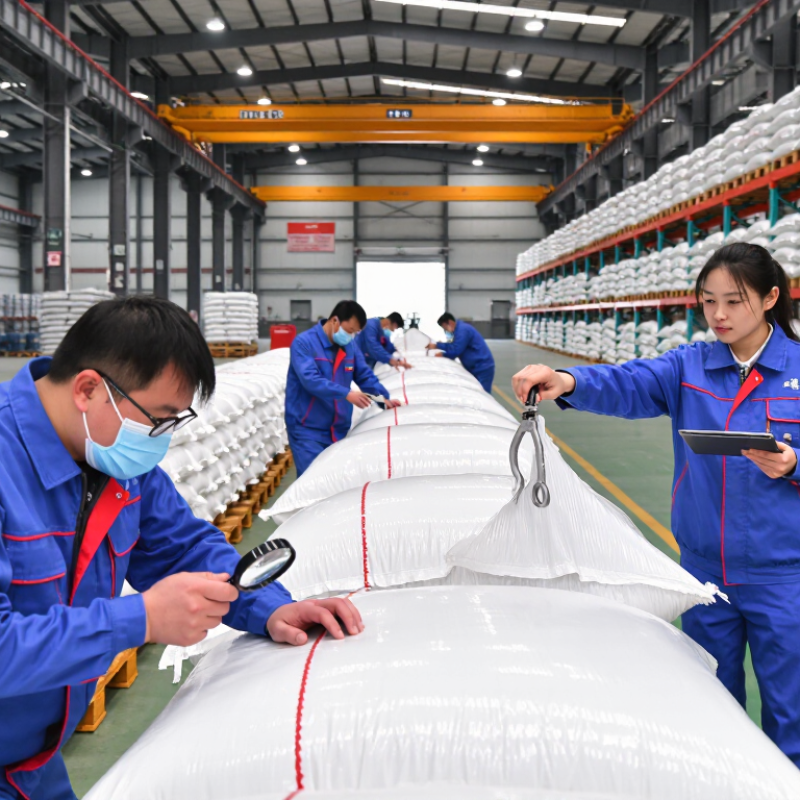
Why Choose a Leading FIBC Quality Control Supplier in China?
FIBC fundamentals begin with safe working load. A 1–2 ton bag typically carries 1,000–2,000 kilograms. That range suits grains, minerals, powders, and construction materials. Mordor Intelligence’s 2025 market analysis forecasts a 6.43% FIBC market CAGR from 2025 to 2030. Demand is growing, but capacity alone proves little. Fabric strength, seam construction, filling conditions, and discharge design must work together.
A 5:1 safety factor means the tested minimum breaking load is five times the rated working load. A 6:1 factor provides a higher margin, often selected for reusable or demanding handling cycles. These ratios do not make poor designs safe. ISO 21898 testing covers lifting, dropping, stacking, and other performance requirements. A 2,000-kilogram bag still needs suitable lifting loops and controlled loading. Bigger is not automatically safer.
Reliable quality control includes fabric GSM checks, seam-strength sampling, dimensional inspection, and documented batch traceability. Independent laboratory testing can expose weaknesses that visual checks miss. In practice, one loose stitch may appear harmless. Under a full load, it can become the failure point. Suppliers should review test results against actual handling conditions, not only printed specifications. This is where procurement teams sometimes need to reflect: the cheapest 6:1 claim may offer less assurance than a verified 5:1 design.
Choosing a leading FIBC quality control supplier in China requires more than checking production capacity. ISO 21898 provides a practical framework for FIBC design, manufacture, testing, and marking. It helps suppliers control factors such as bag construction, lifting systems, seams, dimensions, and safe working load.
Each design should match its intended filling, handling, storage, and discharge conditions. Testing may include lifting trials, toppling checks, drop tests, and seam performance assessments. A reliable supplier keeps documented test records and links each production batch to raw materials, operators, and inspection results. Clear traceability matters.
Small details often reveal real experience. Inspectors should examine fabric surfaces, corner loops, stitching density, and discharge spouts under proper lighting. They should also compare measured dimensions with approved drawings. One loose thread may not cause failure, but repeated inconsistencies deserve attention.
ISO 21898 is not a substitute for careful engineering. The standard does not remove every practical risk. Real production is never perfectly uniform. A responsible supplier should acknowledge variation and explain how it is controlled. Sampling plans, calibrated equipment, and trained inspectors strengthen reliability, but they still require honest review.
Buyers should confirm the standard’s applicable scope and edition before approving a product. They should request test methods, acceptance criteria, and inspection frequency in writing. This extra step can feel slow. It often prevents expensive misunderstandings later.
Choosing a leading FIBC quality control supplier in China starts with a disciplined supplier audit. The audit should begin at the material warehouse, not the production line. Inspectors verify polypropylene resin documents, lot numbers, additives, and storage conditions. Damp floors, open bags, or mixed batches deserve immediate attention.
Testing must match the bag’s intended use. A competent team checks fabric strength, seam performance, lifting-loop capacity, UV resistance, and safe working load. Samples should come from different production stages, not only from finished cartons. Test reports need clear methods, equipment details, dates, and approval signatures. Numbers without test conditions are weak evidence. Very weak.
Traceability connects each finished FIBC to its source materials and production records. A reliable supplier can identify the resin lot, weaving shift, sewing line, inspector, and packing date. Labels should remain readable after handling. Random record checks often reveal gaps that polished presentations hide. Digital systems help, but they are not automatically accurate.
Factory controls also require direct observation. Auditors should review calibration stickers, maintenance logs, worker training, needle control, cleaning routines, and nonconforming-product areas. Watch how operators handle fabric rolls and reject damaged loops. A factory may pass one visit and still drift later. That is an uncomfortable possibility. Therefore, repeat audits, independent sampling, and corrective-action verification provide stronger confidence than a single certificate. A leading supplier welcomes those checks and explains limitations instead of promising perfection.
Why Choose a Leading FIBC Quality Control Supplier in China?
A reliable FIBC supplier should prove performance, not merely display certificates. Experienced inspectors examine tensile strength in fabric, lifting loops, and body panels. Testing follows recognized references, including ISO 21898:2004 and ASTM D4169-23. These methods help confirm whether bags withstand filling, transport, and handling stress. One small weakness can become a costly failure.
Drop testing checks impact resistance after controlled lifting and release. Topple testing examines stability when a filled bag falls sideways. UV verification exposes samples to simulated sunlight, heat, and moisture. This matters because the UNEP Global Resources Outlook 2024 reports that global resource extraction may rise by 60% by 2060. Longer-lasting packaging can reduce repeated replacement, although durability alone does not solve waste issues. Seam-strength verification is equally important. Inspectors measure stitched areas, corners, and loop attachments, where stress often concentrates.
Tips: Request raw test data, sample identification, equipment calibration records, and test dates. Ask whether samples represent actual production lots. A polished report is not enough. I would also review failed samples, not only passing ones. That uncomfortable detail often reveals weak stitching, uneven coating, or unrealistic test conditions. A strong China-based quality control partner should provide traceable photographs, independent verification, and clear corrective actions.
| Verification Area | Purpose | Representative Method or Reference | Key Test Conditions and Measurements | Typical Acceptance Decision | Quality Records |
|---|---|---|---|---|---|
| Fabric Tensile Strength | Confirms that woven polypropylene fabric can withstand the specified loading and handling forces. | ISO 13934-1 or ASTM D5034; the applicable FIBC specification and ISO 21898 requirements should govern the final method. | Test warp and weft specimens separately. Record maximum force, elongation at break, specimen direction, conditioning, and failure location. | Each result meets or exceeds the approved technical specification. Failures caused by slippage, premature tearing, or visible defects require investigation. | Sample identification, fabric lot, direction, force, elongation, operator, equipment ID, and calibration status. |
| Drop Resistance | Evaluates whether a filled FIBC can withstand accidental dropping during lifting, movement, or storage. | UN performance-testing framework for applicable flexible IBCs and ISO 21898; the required drop height depends on the certified design and regulatory classification. | Use the specified gross mass and filling material. Record drop height, number of drops, impact orientation, package condition, leakage, and loss of contents. | No rupture, dangerous leakage, or loss of contents that would make the package unsafe or non-compliant under the applicable design-test requirement. | Gross mass, fill material, drop height, impact surface, drop sequence, photographs, and post-test inspection. |
| Topple or Overturning Test | Checks stability and structural integrity when a filled container is tilted or overturned during handling. | ISO 21898 or the customer-approved handling and performance protocol; the selected procedure should match the FIBC design and intended use. | Record filled mass, support configuration, tilt or overturning sequence, body deformation, loop condition, seam condition, and leakage. | The FIBC remains intact and does not develop unacceptable leakage, hazardous distortion, or lifting-loop damage. | Product code, fill level, gross mass, test sequence, observations, images, and final disposition. |
| UV Resistance | Assesses degradation of polypropylene fabric and lifting components caused by ultraviolet exposure during outdoor storage or transport. | ISO 21898 UV-resistance provisions, when applicable, together with ASTM G154 or another approved accelerated-weathering procedure. | Record lamp type, irradiance, exposure cycle, total exposure time, specimen orientation, tensile retention, color change, brittleness, and cracking. | After the approved exposure, retained strength and appearance remain within the project specification. The exact exposure schedule must be defined before testing. | Exposure cycle, chamber settings, irradiance, duration, pre-test values, post-test values, and percentage strength retention. |
| Seam Strength | Verifies that sewn or welded joints provide adequate load transfer and do not become the first point of failure. | ISO 21898 seam requirements, supported where appropriate by ISO 13935-1 or an approved seam-strength procedure. | Test representative seams from the body, base, discharge spout, and closure areas. Record force at failure, failure mode, stitch condition, and sampling location. | Measured strength meets the approved seam specification, with no skipped stitches, open seams, excessive thread damage, or fabric pull-out. | Seam location, stitch type, stitch density, thread specification, peak force, failure mode, and inspection photographs. |
| Lifting-Loop Integrity | Confirms that lifting loops and their attachment points can safely support the specified working load. | ISO 21898 and the approved FIBC safe-working-load design calculation or qualification plan. | Apply the specified load through the intended lifting arrangement. Inspect loop webbing, reinforcement, stitching, corner seams, and deformation. | No rupture or separation occurs, and the lifting assembly remains suitable for the declared safe working load and safety factor. | Declared safe working load, lifting configuration, applied load, duration, attachment details, and post-test condition. |
| Visual and Dimensional Inspection | Detects manufacturing defects that may affect filling, discharge, stacking, handling, or product containment. | Approved drawing, purchase specification, ISO 21898 design requirements, and documented sampling plan. | Check length, width, height, panel alignment, fabric appearance, coating, liners, closures, labels, seams, lifting loops, and contamination. | Dimensions remain within approved tolerances and no critical, major, or unacceptable minor defects are present under the agreed inspection plan. | Inspection level, sample size, measured dimensions, defect classification, photographs, and corrective-action reference. |
| Test-System Control | Ensures that reported results are traceable, repeatable, and suitable for production-release decisions. | ISO/IEC 17025 principles for competent testing laboratories, where applicable, plus an internal calibration and document-control procedure. | Verify equipment calibration, reference standards, method revision, environmental conditions, operator authorization, sample traceability, and data review. | Only results generated with valid equipment, controlled methods, identifiable samples, and complete records are accepted for release. | Calibration certificates, method revision, raw data, equipment ID, analyst signature, review approval, and retained samples. |
Choosing a leading FIBC quality control supplier in China involves more than comparing quotations. Compliance must be visible in daily production. Inspectors should check fabric denier, coating thickness, seam strength, lifting loops, and safe working load. Drop tests and load tests should follow agreed specifications. Each batch should carry traceable records, from raw material receipt to final packing. Test reports must match the actual production lot.
China’s supply advantage comes from manufacturing scale. Multiple looms, cutting lines, and sewing teams can support large orders and steady replenishment. However, scale can also create inconsistency without disciplined supervision. A reliable supplier confirms capacity before accepting an order. The schedule should show sample approval, material arrival, in-process inspection, and container loading. Short lead times are useful, but rushed production may increase defects. Small details matter.
Cost should be measured beyond the unit price. Stronger seams, accurate dimensions, and stable fabric quality can reduce product loss and replacement expenses. A transparent quotation separates testing, packaging, minimum quantities, and freight assumptions. Buyers should compare identical specifications, not attractive numbers alone. Remote audits remain limited; they cannot reveal every workplace habit or process weakness. Periodic third-party inspections and retained samples improve confidence. No supplier is flawless. The better question is whether its controls identify mistakes early and respond with documented corrective action.