iGene Labserve

Top 10 Mini Sprinklers for Efficient Irrigation

Water efficiency is no longer a minor gardening concern. It is a practical response to rising water pressure, uneven rainfall, and higher maintenance costs.

The FAO AQUASTAT database reports that agriculture accounts for roughly 70% of global freshwater withdrawals. At household level, the U.S. Environmental Protection Agency’s WaterSense program notes that landscape irrigation can represent nearly one-third of residential water use. It also warns that inefficient systems may waste water through runoff, evaporation, and overspray. These figures give Mini Sprinklers a meaningful role in smaller gardens, nurseries, raised beds, and targeted landscape zones.

A well-designed Mini Sprinklers system can distribute water close to plant roots without flooding narrow planting areas. However, performance depends on nozzle pattern, operating pressure, spacing, soil absorption, and wind exposure. A compact sprinkler may look efficient on a product page but perform poorly when pressure drops or nearby plants block its spray.

This guide examines the Top 10 Mini Sprinklers for Efficient Irrigation using practical criteria. These include coverage uniformity, flow control, clog resistance, installation effort, material quality, and long-term maintenance. Product specifications are useful, but field conditions matter more.

No product wins everywhere.

A sandy bed may need shorter, more frequent cycles. Heavy clay may require pauses to prevent runoff. The ranking is therefore a useful starting point, not a permanent verdict. Readers should still test catch-can distribution, inspect connections, and adjust watering schedules seasonally. Small mistakes can remain expensive. Reliable irrigation comes from matching the sprinkler to the soil, crop, pressure, and actual watering need.
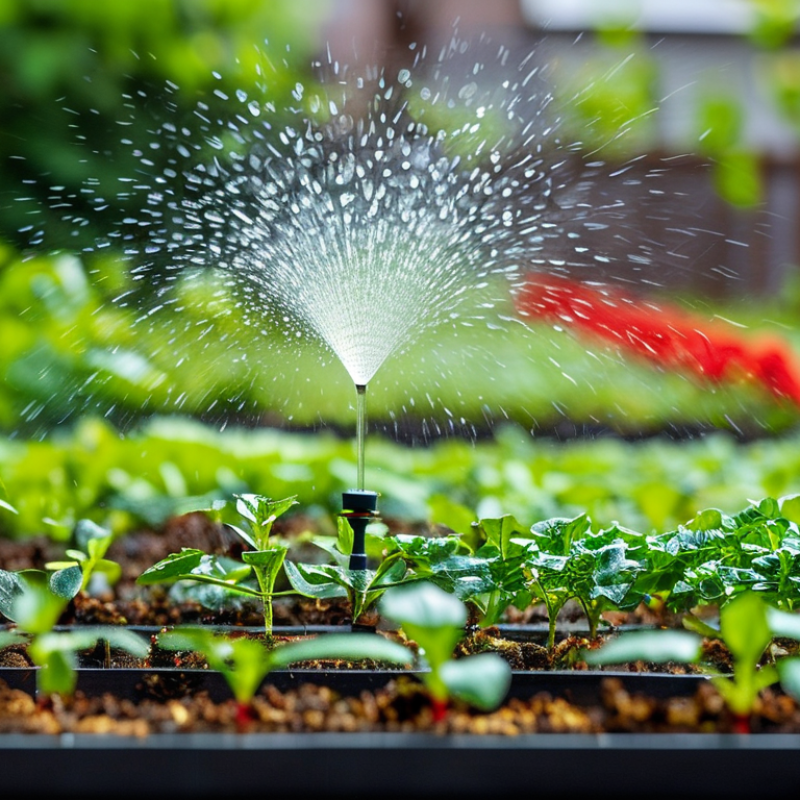
Top 10 Mini Sprinklers for Efficient Irrigation

Mini Sprinklers: Definition, Purpose, and Core Irrigation Principles

Mini sprinklers are compact irrigation devices that distribute water through fine streams or gentle sprays. They usually cover small, circular areas around plants, beds, or young trees. Unlike drip emitters, they wet a broader surface and can cool foliage during hot weather.

Their purpose is controlled coverage with less water waste than open-hose watering. Effective irrigation depends on pressure, spacing, soil type, and application rate. A sprinkler should overlap nearby patterns slightly. Gaps can leave dry patches, while excessive overlap may create runoff. Measure the flow before installation. A simple container test often reveals more than a product label.

I have seen gardeners place mini sprinklers too close to plant stems. That choice sometimes encourages constant surface moisture. Root zones may remain unevenly watered. Better placement usually targets the surrounding soil, not the trunk or crown. Wind also changes spray direction, especially in exposed beds. No layout is perfect. Recheck the soil after several watering cycles, then adjust spacing or operating time. Sandy soil may need shorter, more frequent applications. Clay soil often needs slower delivery and pauses for infiltration. A timer adds consistency, but it cannot correct poor pressure or blocked nozzles. Clean the filter and inspect the spray pattern regularly. Small details matter.

Top 10 Mini Sprinklers for Efficient Irrigation

Mini sprinklers apply water over a localized area at relatively low flow rates, making them suitable for orchards, nurseries, greenhouses, and landscaped beds. The chart compares representative operating values commonly used in irrigation design. Actual performance depends on nozzle size, operating pressure, spacing, wind, and filtration.

Efficient irrigation requires matching sprinkler discharge and wetted diameter to soil infiltration, plant spacing, and application depth. Overlapping the wetted patterns helps improve uniformity and reduces dry spots and runoff.

Key Features to Compare When Selecting Mini Sprinklers

Top 10 Mini Sprinklers for Efficient Irrigation

Key Features to Compare When Selecting Mini Sprinklers

Mini sprinklers can reduce dry patches, but only when their specifications match the site. Compare flow rate, spray radius, operating pressure, and precipitation rate. Pressure matters. Measure it at the sprinkler, not only near the pump. A model designed for 2 bar may produce uneven coverage at lower pressure. Wind can also distort fine droplets, especially in exposed vegetable beds.

Filtration deserves equal attention. Small nozzles clog quickly when water contains sand, algae, or organic debris. Check the recommended mesh size and choose a filter that is easy to clean. The United Nations Food and Agriculture Organization reports that agriculture uses about 70% of global freshwater withdrawals. Small efficiency gains therefore matter. Yet a low-flow sprinkler is not automatically efficient. Poor spacing can waste water outside the root zone.

USDA Natural Resources Conservation Service guidance evaluates sprinkler performance through distribution uniformity. Many field designs treat roughly 70% uniformity as a practical minimum, though crop and soil conditions change the target. Compare adjustable patterns, shut-off options, material durability, and spare nozzle availability. I have found that simple designs are easier to inspect. That is not always convenient. A rotating head may look impressive, but its moving parts can fail in gritty water. Test several units in the actual bed, record wetting depth, and reconsider the layout after one irrigation cycle.

Top Mini Sprinkler Types for Different Garden and Landscape Needs

Top 10 Mini Sprinklers for Efficient Irrigation

Mini sprinklers work best when their spray pattern matches the planting area. Micro-bubblers deliver gentle, concentrated water around young trees and large containers. Micro-sprays cover narrow flower beds with a soft fan-shaped pattern. Rotating mini sprinklers suit small lawns because their streams travel farther with less continuous mist. Adjustable spike models help gardeners change height, angle, and coverage as plants grow.

The Food and Agriculture Organization reports that agriculture uses about 70% of global freshwater withdrawals. Small irrigation errors matter, even in a backyard. The U.S. Environmental Protection Agency also reports that outdoor irrigation represents nearly one-third of household water use.

For vegetable beds, choose low-angle sprinklers that reduce leaf disturbance. For shrubs, use overlapping circular patterns around the root zone. I once placed a sprinkler too close to a wall. The wet patch looked harmless, but several plants stayed dry. Placement needs observation.

Tips: Check coverage with shallow cups. Run each sprinkler for ten minutes, then compare water depth. Keep head spacing close enough for even overlap. Use a filter when fine nozzles clog easily. Water early in the morning to reduce evaporation. These practical checks reflect irrigation guidance from agricultural extension services. Still, no layout stays perfect. Wind, soil texture, and seasonal growth keep changing the result.

Installation, Spacing, and Water-Distribution Considerations

Mini sprinklers can deliver precise coverage, but installation quality controls their real performance. The U.S. Environmental Protection Agency estimates that outdoor irrigation uses nearly nine billion gallons of water daily. Poor spacing increases that waste. Place sprinklers for head-to-head coverage, allowing each spray pattern to reach the next sprinkler. Measure actual spacing after installation, not only from a product diagram. A 1.5-meter layout may fail on sloped ground or during windy conditions.

Use a clean filter, pressure regulator, and firm support stake. Flush the lateral line before attaching each nozzle. Uneven pressure creates visible dry rings near the edges. The Irrigation Association’s landscape best-practice guidance commonly treats about 70% distribution uniformity as a practical field target. Check it with catch cups placed in a grid. Run the system for a fixed time, record each cup, and adjust spacing or pressure. It is a simple test, yet often skipped.

Tips: Keep spray below dense foliage. Reduce spacing in windy sites. Avoid mixing nozzles with different flow rates in one zone. Inspect clogged outlets every month. FAO-56 guidance also supports adjusting irrigation for weather, crop demand, and soil conditions. A fixed timer is convenient, but not always accurate. I would recheck the layout after one growing season, because plant growth, settling soil, and blocked outlets can quietly change water distribution.

Maintenance, Efficiency, and Long-Term Performance Evaluation

Evaluating the top 10 mini sprinklers requires more than comparing spray patterns. Long-term performance depends on maintenance, pressure stability, and resistance to mineral buildup. During a practical inspection, I check each unit with a pressure gauge and a measured collection test. This reveals uneven coverage that visual checks often miss. Measure twice. Flow rates should remain consistent across the irrigation zone, especially near the farthest sprinkler.

Fine screens need regular cleaning because sand and algae can restrict narrow passages. Flush the lines before installing new nozzles, then inspect seals for cracking or flattening. In hard-water areas, mineral deposits may distort the spray within weeks. A soft brush usually works better than sharp tools, which can damage the opening. I once ignored a partly blocked filter and blamed the sprinkler design. That assumption was wrong.

Efficiency also depends on operating pressure and weather. Excessive pressure creates mist, while low pressure leaves dry patches. Windy conditions can carry small droplets beyond the planting area. Durable materials, replaceable filters, and accessible flow controls improve service life. Keep notes. Record cleaning dates, pressure readings, and observed wetting patterns. These details support more reliable comparisons among the ten options. Still, no sprinkler remains efficient without occasional adjustment as plants grow, soil settles, and water quality changes.

Top 10 Mini Sprinklers for Efficient Irrigation - Maintenance, Efficiency, and Long-Term Performance Evaluation

Rank Mini Sprinkler Type Typical Flow Rate Typical Operating Pressure Approximate Wetted Diameter Application Efficiency Maintenance Demand Expected Service Life* Best Use Long-Term Performance Notes
1 Adjustable full-circle micro-sprinkler 35–120 L/h 1.5–2.5 bar 3–6 m High Flush monthly; inspect adjustment mechanism 5–8 years Vegetable beds, nurseries, and mixed planting areas Flexible flow control reduces overwatering, but the adjustment screw should be protected from sediment and mineral buildup.
2 Pressure-compensating micro-sprinkler 40–120 L/h 1.5–4.0 bar 3–6 m Very high Filter at 120 mesh or finer; flush laterals periodically 6–10 years Sloping ground and long irrigation laterals Maintains a more consistent discharge across pressure variation, improving uniformity on uneven terrain.
3 Inverted micro-sprinkler 30–100 L/h 1.5–3.0 bar 3–5 m High Check hanging supports and clean the nozzle every 4–8 weeks 5–8 years Greenhouses, shade houses, and overhead crop layouts Keeps the emitter away from soil splash and can provide even overhead coverage when mounted securely.
4 Full-circle spinner micro-sprinkler 40–150 L/h 1.5–3.5 bar 4–8 m High Clean spinner and nozzle; verify rotation during inspections 4–7 years Orchards, nurseries, and broad plant beds Rotating distribution produces a wide wetted pattern; poor filtration can stop the spinner and create dry zones.
5 Half-circle micro-sprinkler 25–90 L/h 1.0–2.5 bar 2.5–5 m High Flush lines and check boundary alignment 5–8 years Edge rows, narrow beds, and perimeter planting Limits water outside the planted area and is efficient where a full-circle pattern would wet paths or walls.
6 Quarter-circle micro-sprinkler 20–70 L/h 1.0–2.5 bar 2–4 m High Inspect angle deflector and flush the branch line 5–8 years Corners, raised beds, and small landscaped sections Provides accurate corner coverage with low overspray when correctly positioned and operated within its pressure range.
7 Strip-pattern micro-sprinkler 30–100 L/h 1.5–3.0 bar 1.5–3 m wide strip High Clean the strip deflector and confirm orientation 4–7 years Long, narrow beds and greenhouse benches Reduces water applied to adjacent walkways, although alignment must be checked after cultivation or maintenance work.
8 Low-angle micro-sprinkler 35–110 L/h 1.5–3.0 bar 3–6 m Medium-high Inspect for blocked outlets and check spray clearance 4–7 years Wind-exposed beds and low-growing crops Lower spray trajectory can reduce wind drift compared with taller spray patterns, but nearby foliage may obstruct coverage.
9 Fogger or fine-mist micro-sprinkler 15–60 L/h 2.0–4.0 bar 1–3 m Medium Use fine filtration; inspect nozzles frequently for clogging 3–6 years Propagation, humidity control, and delicate seedlings Creates fine droplets for cooling and humidity, but wind, evaporation, and hard-water deposits can reduce irrigation efficiency.
10 Stake-mounted shrub micro-sprinkler 40–150 L/h 1.5–3.5 bar 3–7 m Medium-high Check stake stability, tubing connections, and spray pattern 4–8 years Individual shrubs, containers, and young trees Easy to reposition as plants grow; stable mounting and protected tubing are essential for consistent long-term coverage.
*Service-life estimates are typical field ranges for UV-stabilized irrigation components operated with suitable filtration, correct pressure, seasonal flushing, and regular inspection. Actual performance varies with water quality, sunlight, chemicals, freezing conditions, and installation quality.