iGene Labserve

China Top 10 Battery Management System PCB Manufacturers

China’s battery supply chain is moving from scale toward finer technical control. The Battery Management System PCB (BMS PCB) sits at that critical point. It connects sensing, protection, balancing, communication, and thermal-control functions inside a battery pack. Small layout errors can create measurable risks, including signal noise, heat concentration, and unreliable voltage readings.

The International Energy Agency’s Global EV Outlook 2024 reported nearly 14 million electric car sales worldwide in 2023. It also noted that electric vehicles represented about one-fifth of new car sales in China. Battery demand is rising with that adoption. The IEA estimated global electric vehicle battery demand exceeded 750 GWh in 2023. These figures explain why BMS PCB capability now matters to automakers, energy-storage developers, and electronics buyers.

The details matter.

Professor Gregory L. Plett, a leading battery-management researcher and author of Battery Management Systems, describes the BMS as “the brain of the battery.” His observation is simple, but technically useful. A weak PCB can limit an otherwise advanced cell pack. A robust design supports accurate monitoring across vibration, humidity, temperature changes, and repeated charging cycles.

This China Top 10 Battery Management System PCB Manufacturers overview considers more than production volume. It examines engineering experience, multilayer PCB capability, high-voltage isolation, traceability, testing systems, certifications, and support for automotive or energy-storage applications. Public supplier information is not always complete. That caveat matters. Rankings can change as factories expand, certifications expire, or customers require different specifications. Readers should verify current facilities, test reports, and compliance documents before selecting a supplier.
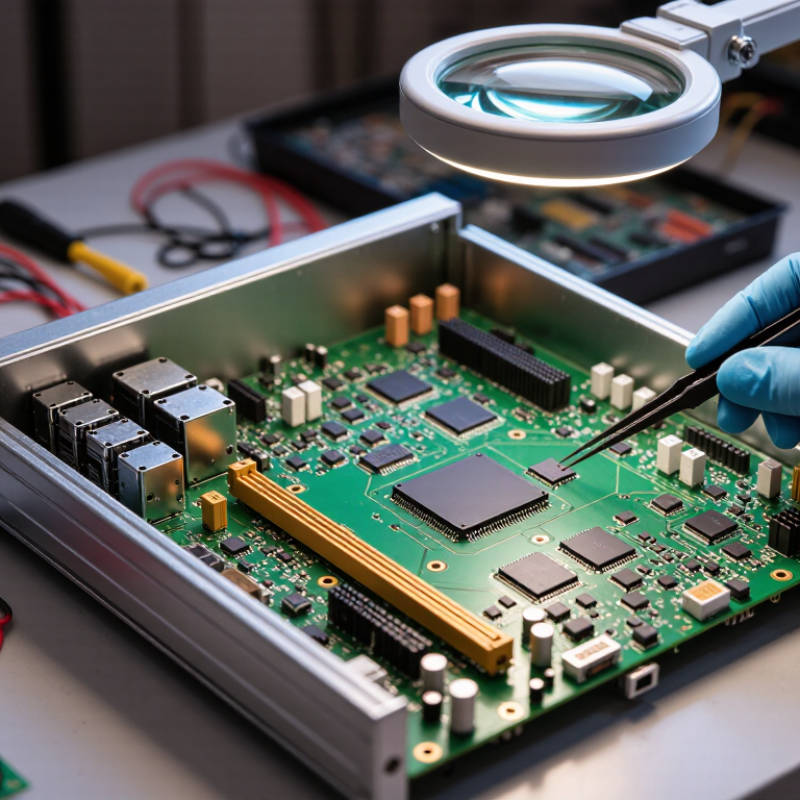
China Top 10 Battery Management System PCB Manufacturers

BMS PCB Fundamentals: 12–800 V Battery System Architecture

A battery management system PCB is the control layer between cells, sensors, contactors, and the load. For 12–800 V packs, architecture changes sharply with voltage, current, and isolation demands. Low-voltage systems may use a centralized board with short sensing paths. Higher-voltage packs often use distributed monitoring boards, isolated communication, and a separate control unit.

Each channel measures cell voltage and temperature with careful filtering. Passive balancing is simpler, but it wastes energy as heat. Active balancing can improve efficiency, yet it adds cost and control complexity. The PCB must also manage precharge, current measurement, insulation monitoring, and emergency shutdown signals. At 800 V, creepage and clearance are not minor layout details. Dust, humidity, and uneven coatings can reduce real-world safety margins.

Tips: Ask manufacturers for high-voltage design records, controlled impedance data, thermal testing, and inspection reports. Check whether solder joints, connectors, and isolation barriers were tested under vibration and temperature cycling. Keep noisy switching paths away from measurement traces. Add test points for production diagnostics. I have seen clean prototypes fail after repeated thermal cycles. That weakness is easy to miss. Designers should review fault cases, not only normal charging behavior. A reliable BMS PCB needs measured evidence, traceable materials, and revision control from prototype to production.

China BMS PCB Standards: GB/T 38698 and IPC-6012 Compliance

China Top 10 Battery Management System PCB Manufacturers

When evaluating China’s top BMS PCB manufacturers, standards should guide the review, not replace engineering judgment. GB/T 38698 provides a Chinese reference for battery management system design, communication, safety, and performance evaluation. Its applicable part and edition must be confirmed before production. Requirements may differ between energy storage and vehicle applications.

IPC-6012 focuses on rigid printed board qualification and performance. It addresses materials, conductor quality, plating, dimensional control, inspection, and testing. A capable manufacturer should link these requirements to controlled drawings, impedance records, solderability checks, and electrical test reports. Ask for traceability from laminate batch to finished PCB. Small details matter. A poorly controlled via can weaken long-term reliability.

Factory audits should include thermal cycling, vibration considerations, insulation resistance, and high-voltage clearance reviews. These checks reflect real BMS conditions, where heat and switching noise can affect measurement accuracy. Certificates alone are not enough. A document may look complete while process evidence remains thin. I would also review design-for-manufacturing feedback, because some suppliers identify spacing or copper-balance risks before tooling. This is useful experience, though not every recommendation is correct. Engineers should challenge assumptions against the latest GB/T 38698 provisions, IPC-6012 class requirements, and the intended battery environment.

Ranking Criteria: 10 Technical and Manufacturing Metrics for BMS PCBs

China Top 10 Battery Management System PCB Manufacturers

Ranking Criteria: 10 Technical and Manufacturing Metrics for BMS PCBs

A credible BMS PCB ranking should measure more than factory size or annual output. In practical audits, we examine ten metrics: voltage sensing accuracy, current-carrying capacity, thermal control, insulation spacing, copper thickness, layer alignment, electromagnetic compatibility, soldering quality, automated testing, and traceability. These factors reveal whether a board can manage charging, balancing, and fault signals under real operating stress.

Voltage accuracy matters when cell differences are small. A stable reference circuit can prevent false protection events. Thick copper traces reduce heat near high-current paths, while controlled impedance supports cleaner communication signals. Thermal tests should include sensors, connectors, and crowded areas around switching components. We also inspect creepage distances under the intended voltage class. Small layout shortcuts can create major reliability concerns.

Manufacturing evidence carries equal weight. A strong supplier provides cross-section samples, inspection records, aging data, and lot-level serial tracking. Automated optical inspection helps, but it cannot replace functional testing. We prefer tests that simulate overvoltage, undervoltage, open-wire detection, and temperature changes. Factory experience shows that connector insertion force is often overlooked. It should not be. No factory scores perfectly. That is normal. However, weak corrective-action reports deserve a lower ranking. Cost also matters, but cheap prototypes may hide unstable materials, inconsistent solder joints, or limited engineering support. A fair ranking therefore balances measured performance, production discipline, documentation quality, and long-term field evidence.

China Top 10 Battery Management System PCB Manufacturers - Ranking Criteria: 10 Technical and Manufacturing Metrics for BMS PCBs

Rank Evaluation Metric Technical or Manufacturing Dimension Recommended Benchmark Weight Verification Method
1 Voltage Measurement Accuracy Accuracy of individual cell-voltage sensing across the specified operating and temperature range. Typically within ±10–25 mV 15% Calibration records, automated end-of-line testing, and comparison with certified voltage references.
2 Current-Sensing Performance Precision, linearity, thermal drift, and noise performance of the shunt or Hall-effect current-measurement circuit. Target error ≤1% of reading 12% Current-source testing at multiple load points, polarity conditions, and operating temperatures.
3 Cell-Balancing Capability Balancing topology, balancing-current control, thermal management, and support for passive or active balancing. Passive: 30–200 mA typical 10% Balancing-current measurement, resistor-temperature monitoring, and cell-equalization testing under load.
4 High-Voltage Isolation Isolation between high-voltage battery circuitry, low-voltage control electronics, communication interfaces, and chassis-related circuits. Designed to system voltage and safety standard 12% Insulation-resistance, dielectric-strength, creepage, clearance, and hipot testing according to the product specification.
5 PCB Layer Stack-Up and Signal Integrity Controlled impedance, grounding, high-current routing, thermal copper distribution, and separation of analog and switching paths. Stack-up controlled to design tolerance 10% Impedance testing, design-rule review, cross-section analysis, and electromagnetic-noise validation.
6 Thermal Management Heat dissipation from balancing resistors, power switches, contactor drivers, current shunts, and voltage-regulation components. Thermal rise within component limits 10% Thermal-camera inspection, thermocouple testing, and worst-case load testing in the specified enclosure.
7 Safety and Protection Functions Protection against overvoltage, undervoltage, overcurrent, short circuit, overtemperature, and abnormal charging conditions. All specified faults detected and controlled 12% Fault-injection testing, protection-threshold validation, response-time measurement, and safety design review.
8 Automated Manufacturing and Inspection Use of solder-paste inspection, automated optical inspection, X-ray inspection where required, and traceable functional testing. 100% electrical test coverage preferred 8% Process audit, inspection records, first-article reports, defect-rate data, and lot-level traceability review.
9 Reliability and Environmental Testing Resistance to temperature cycling, vibration, humidity, mechanical shock, corrosion, and long-duration electrical operation. Test plan matched to application profile 6% Environmental qualification reports, accelerated-life testing, vibration testing, and post-test electrical inspection.
10 Quality Systems and Supply-Chain Traceability Control of components, lot traceability, engineering-change management, corrective actions, and production consistency. Documented QMS and full batch traceability 5% Audit certificates, material declarations, supplier-approval records, change notices, and corrective-action reports.
Total Evaluation Weight 100% Use weighted scores only after validating supplier-specific evidence.

Note: The benchmarks are general engineering reference values for BMS PCB evaluation. Final requirements should be confirmed against the battery chemistry, pack voltage, continuous and peak current, enclosure, operating environment, and applicable safety standards.

China’s Top 10 BMS PCB Manufacturers: Capabilities and Market Data

China Top 10 Battery Management System PCB Manufacturers

China’s top 10 BMS PCB manufacturers are mainly concentrated in advanced electronics clusters. Their capabilities cover rigid, flexible, and rigid-flex boards for electric vehicles, energy storage, and industrial battery packs. Public supplier disclosures and procurement records indicate steady demand growth from 2023 to 2025, driven by larger battery systems and stricter safety monitoring. Some suppliers report monthly output above 100,000 square meters, although figures vary by product type and factory scope.

Key evaluation points include multilayer control, impedance management, thermal design, and automated optical inspection. Many leading factories support four to 20-layer boards, fine-pitch components, and high-voltage isolation layouts. Typical prototype delivery ranges from three to seven working days. Mass-production lead times often reach two to four weeks. Quality systems commonly include traceability, electrical testing, aging checks, and failure analysis.

Market data needs careful reading. “Top 10” lists may rank revenue, capacity, export volume, or automotive certification differently. That matters. A large factory is not always the best match for a small BMS design. In practice, buyers should compare defect rates, engineering response time, copper thickness, and documented field performance. Some published capacity numbers also combine unrelated PCB products. This is easy to overlook. A reliable assessment should therefore use audited records, sample testing, and recent delivery evidence rather than rankings alone.

China’s Top 10 BMS PCB Manufacturers: Capabilities and Market Data

China New Energy Vehicle (NEV) sales provide a market-demand indicator for battery management system PCBs. The figures below show annual NEV sales in China from 2020 to 2024.

Source: China Association of Automobile Manufacturers (CAAM), annual NEV sales data. Higher NEV volumes generally increase demand for BMS control boards, sensing circuits, and related automotive PCB assemblies.

Applications and Outlook: EV, ESS, and 2025 BMS PCB Trends

China Top 10 Battery Management System PCB Manufacturers: Applications and Outlook

In 2025, BMS PCB manufacturing is moving beyond basic voltage monitoring. Electric vehicles need compact boards that manage cell balancing, temperature sensing, insulation, and rapid fault detection. A practical board may operate near vibration, humidity, and strong electrical noise. That environment exposes weak solder joints quickly. Experience shows that layout discipline matters as much as component selection. Short signal paths, controlled grounding, and reinforced connectors improve field reliability. However, no ranking is permanent. Factory testing depth, traceability, and engineering support can change the real order.

Energy storage systems create different demands. Their BMS PCBs often serve larger battery racks, longer cable routes, and wider temperature ranges. Designers must consider communication isolation, service access, fire-related monitoring, and stable operation during repeated charging cycles. In 2025, modular architectures and improved wireless monitoring may reduce wiring complexity. They can also introduce new security and interference concerns. That trade-off deserves careful review.

Tips: Ask manufacturers for thermal-cycle records, insulation test results, and sample inspection data. Check copper thickness, surface finish, creepage distances, and balancing accuracy. Request a production sample before approving volume orders. Do not judge quality by price alone. A cheaper PCB can become expensive after one field failure. Even experienced teams should reassess assumptions when battery chemistry, pack size, or installation conditions change.