Which Is the Best Industrial PCB Type in China?
China is the world’s largest PCB manufacturing base, but production scale does not determine the best board for every industrial application. The correct Industrial Pcb must match voltage, current, heat, vibration, moisture, service life, and certification requirements. A factory-control cabinet may need a robust multilayer FR-4 board. A motor drive may require high-Tg laminate, heavier copper, and stronger thermal management. A compact sensor may benefit from HDI or rigid-flex construction.
Prismark’s PCB Industry Forecast has consistently placed China at roughly half of global PCB production value. IPC technology roadmaps also show growing demand for higher layer counts, finer lines, improved reliability, and better thermal performance. These trends matter, but market share alone cannot prove manufacturing quality. It only shows capacity.
John W. Mitchell, IPC president and CEO, has stated, “Standards are the foundation of the electronics industry.” That principle is practical. Buyers should review IPC-6012 compliance, material certifications, impedance reports, cross-section records, and thermal-cycle results. UL recognition may also be essential for control and power equipment.
There is no perfect PCB type.
That answer sounds simple, perhaps too simple. A low-cost FR-4 board may perform reliably in a dry indoor machine, yet fail inside a hot outdoor inverter. Metal-core construction can improve heat dissipation, but it may increase cost and restrict routing flexibility. Rigid-flex designs save space, although their bending zones demand stricter process control. The best choice in China is therefore the board supported by verified engineering evidence, stable process capability, and transparent supplier communication—not merely the lowest quotation.
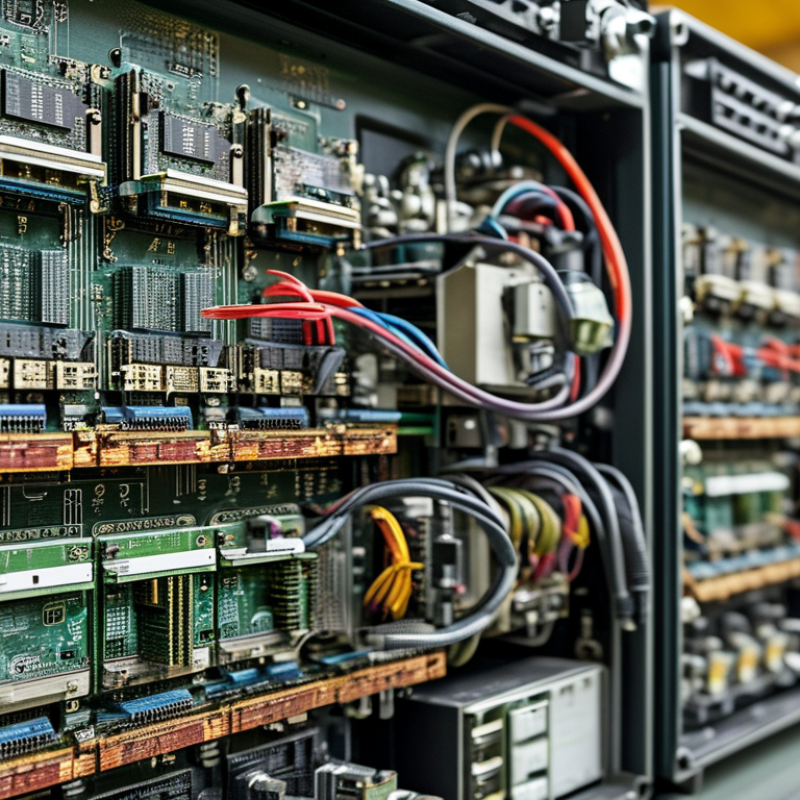
Industrial PCB Types Commonly Manufactured in China
Which Is the Best Industrial PCB Type in China?
China’s PCB factories commonly manufacture rigid, flexible, rigid-flex, metal-core, and high-density interconnect boards. Each type serves a different industrial pressure.
Rigid multilayer PCBs remain common in controllers, inverters, and factory monitoring equipment. They provide stable mechanical support and predictable signal routing. FR-4 materials suit many standard environments. High-temperature laminates perform better near motors, heaters, or power modules. Flexible PCBs reduce wiring space inside sensors and compact control panels. Rigid-flex designs combine movement with reliable connections, but their process control is more demanding.
Metal-core PCBs help transfer heat from power LEDs, converters, and motor drivers. Their aluminum or copper base needs careful insulation and thermal testing. HDI boards support dense components in smaller industrial devices. They require precise drilling, controlled microvias, and stronger inspection procedures. That sounds efficient. It can also raise cost and repair difficulty.
From practical supplier evaluations, the best choice starts with the working environment, not the lowest quotation. Engineers should review voltage, current, vibration, humidity, temperature cycles, and expected service life. Factory audits should check material certificates, batch traceability, solder-mask control, and electrical testing records. AOI, X-ray inspection, impedance testing, and thermal cycling reveal different defects. Specifications can still miss real assembly problems. A pilot order exposes them earlier. Sometimes, a simpler four-layer board proves more reliable than an ambitious HDI design. That judgment deserves another review.
Key Criteria for Selecting the Best Industrial PCB
Selecting the best industrial PCB in China starts with the operating environment, not the lowest quotation. Rigid multilayer boards suit control cabinets, PLCs, and factory sensors with stable geometry. Flex and rigid-flex boards help when cables move repeatedly or space is limited. Metal-core PCBs manage heat around power components. HDI is useful for dense layouts, but it can increase cost and inspection difficulty.
Thermal performance deserves measured evidence. Ask for thermal cycling, humidity-bias, insulation-resistance, and solderability results. High-Tg laminate is often safer near furnaces or motor drives. For heavy current, specify copper thickness, via structure, and allowable temperature rise. IPC-2221 and IPC-6012 provide useful design and qualification references. IPC’s 2024 electronics industry outlook also identifies supply-chain resilience and quality consistency as major purchasing concerns.
Traceability matters more than attractive samples. Require lot numbers, material certificates, cross-section reports, and automated optical inspection records. ISO 9001 is helpful, but it does not prove every board is reliable. Factory capability should be checked against IPC-A-600 acceptance criteria, not promises. Fortune Business Insights valued the global PCB market at about US$83 billion in 2024, showing strong demand but also intense capacity pressure. Bigger capacity is not automatically better. I would compare defect rates, lead-time variation, and engineering response across three production lots. A perfect specification rarely exists. The difficult part is balancing thermal margin, mechanical stress, signal integrity, repairability, and total lifecycle cost.
China’s Industrial PCB Manufacturing and Quality Standards
Choosing the best industrial PCB type in China depends on operating conditions, not production volume alone. Rigid multilayer boards suit control cabinets, industrial computers, and motor drives. Metal-core PCBs can improve heat dissipation near power devices. HDI designs help when equipment requires compact wiring and fine-pitch components. The correct choice begins with voltage, current, temperature, vibration, and expected service life.
China’s industrial PCB manufacturing relies on controlled engineering processes and documented quality standards. Responsible factories often work with IPC-6012 performance requirements and IPC-A-600 visual acceptance criteria. ISO 9001 supports process consistency, while ISO 14001 addresses environmental management. Quality checks may include material verification, automated optical inspection, electrical testing, impedance measurement, and microsection analysis. A test coupon beside the panel can reveal whether controlled impedance remains stable.
Details matter. Copper thickness should match the actual current load, not only the drawing. Via filling, solder mask alignment, and laminate selection deserve close review. Thermal cycling can expose hidden delamination. It is also wise to request traceability for resin systems, copper foil, and inspection records. Production experience shows that even a clean first article may not represent every later batch. Mistakes happen. Sometimes inspection plans are too narrow, or design notes remain unclear. Engineers should review failures openly and update specifications before scaling production. Reliability is built through repeated evidence, not attractive samples alone.
How to Choose the Right Industrial PCB for Your Project
Choosing the right industrial PCB in China starts with the working environment, not the lowest quotation. A factory floor may expose boards to heat, vibration, dust, moisture, or electrical noise. Your PCB must survive these conditions for years.
Define the operating temperature range first. Then check required layer count, copper thickness, board size, and current capacity. A thicker board is not always better. It can increase cost and create assembly difficulties. High-speed equipment may need controlled impedance and careful signal routing. Power systems may require wider traces, stronger vias, and improved heat dissipation. Ask the manufacturer for material data, cross-section reports, and test records. Traceability matters.
Supplier evaluation needs practical evidence. Review process control, incoming material checks, solderability testing, electrical tests, and final visual inspection. Confirm whether the factory can manage small design changes without losing revision control. I have seen projects delayed by unclear drawings, not complex technology. That detail is easy to underestimate. Ask for sample boards made with the same materials and processes as mass production. Test them under realistic loads, vibration, and temperature changes. A supplier’s confident answer is useful, but documented evidence is stronger. Leave room for redesign, because the first specification may be incomplete.
Which Is the Best Industrial PCB Type in China?
How to Choose the Right Industrial PCB for Your Project
Ceramic and high-Tg FR-4 PCBs generally provide better thermal performance, while metal-core PCBs are suitable for applications that require efficient heat dissipation. Standard FR-4 and flexible polyimide PCBs are practical choices for general industrial electronics and space-constrained designs. The values below represent typical continuous operating temperature ranges; the final rating depends on the material grade, layer structure, copper thickness, and manufacturing process.
